Clean and Green

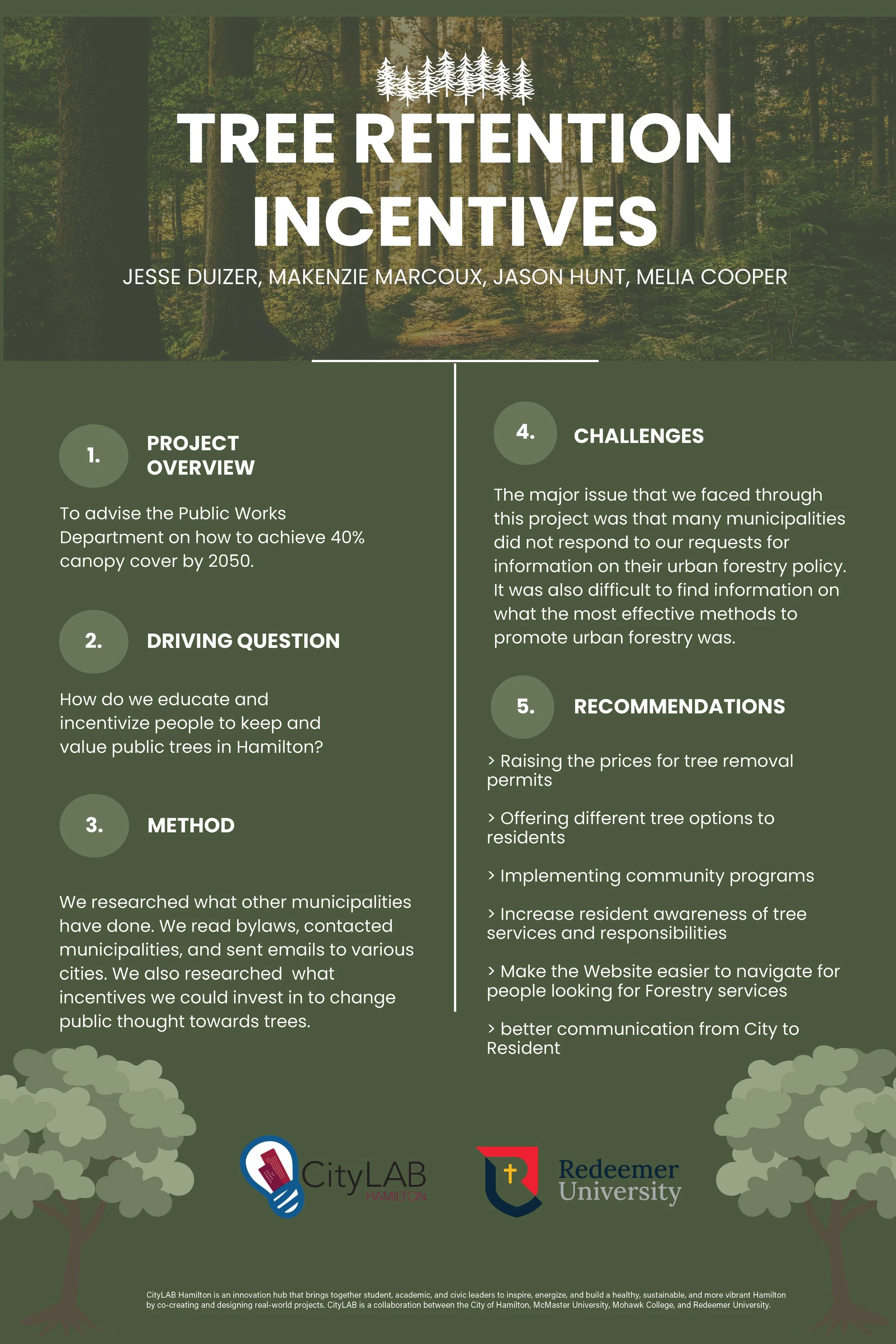
Public Tree Offsetting Fees

How can we encourage applicants to preserve and/or plant public trees that may be impacted through development?

Project Description: The City of Hamilton issues permits for any works that will affect a public tree in accordance with the City's Public Tree By-Law. The City wants to encourage applicants to preserve existing trees and to plant new trees. The focus of this project is to undertake a review of the practices used in other municipalities for offsetting fees (or “incentives”) for planting new trees, protecting existing trees based on development type. Key project tasks include reviewing and collecting information on what other municipalities are doing, conducting interviews with municipalities, and provide an analysis of the data collected.

City Staff: Louise Thomassin, Senior Project Manager, Public Works Department

Deliverables: Primary research, Secondary research, research report

Project Partner: Redeemer University

Location: City Wide

City Strategy Priority: Clean and Green, Economic Prosperity and Growth
Active Transport: Shifting Trends

What are the factors that may influence the adoption of active transportation modes?

Project Description: Over the years, the City has implemented numerous bike lanes and multi-use paths with the expectation of shifting trips from private vehicles to active transportation modes. This study will assess the actual versus expected impact on mode share and identify factors that may influence adoption. There are several research questions to be considered including:

  • What extent has the implementation of bike lanes and multi-use paths influence modal shift?

  • How does usage vary based on infrastructure type, land use, connectivity, and demographics?

  • What barriers limit higher adoption rates, e.g., safety concerns, network gaps, lack of end-of-trip facilities?

  • How do factors such as weather, trip distance, and social acceptance impact modal shift?

The information shall be used to help inform the framework for continuous performance monitoring of active transportation investments.

City Staff: Tanvir Chowdhury , Project Manager, Public Works Department

Deliverables: Primary research, Secondary research, feasibility study, policy paper

Project Partner: McMaster University

Location: City Wide

City Strategy Priority: Community Engagement and Participation, Healthy and Safe Communities, Economic Prosperity and Growth, Culture and Diversity, Clean and Green, Built Environment and Infrastructure

Tap Into Change: The Home Ripple Effect

How can the City of Hamilton help homeowners better understand plumbing ownership, connection to water, wastewater and stormwater resources and connection to City support?

Project Description: The City of Hamilton receives many public inquiries related to water services for residential properties. The focus of this project is to build an interactive virtual house model as a visual tool to help inform residents about the water, wastewater and stormwater related services around the home, such as internal plumbing, water meters, and external features including downspouts, water shut-off valves, property grading, and connection to the watermain and sewer system. The virtual model would be linked to the City’s website to provide information on how each component functions. Ideally, this model may be designed to demonstrate “before and after” effects of household projects such as landscape grading to prevent flooding, and downspout disconnection. The interactive tool would be extremely valuable in building awareness of water, wastewater and stormwater issues impacting a typical residential property.

City Staff: Deb Stringer, Community Outreach Educator, Public Works Department

Deliverables: Secondary research Design, App, Developing a website

Project Partner: Mohawk College

Location: City Wide

City Strategy Priority: Community Engagement and Participation, Built Environment and Infrastructure, Clean and Green, Healthy and Safe Communities

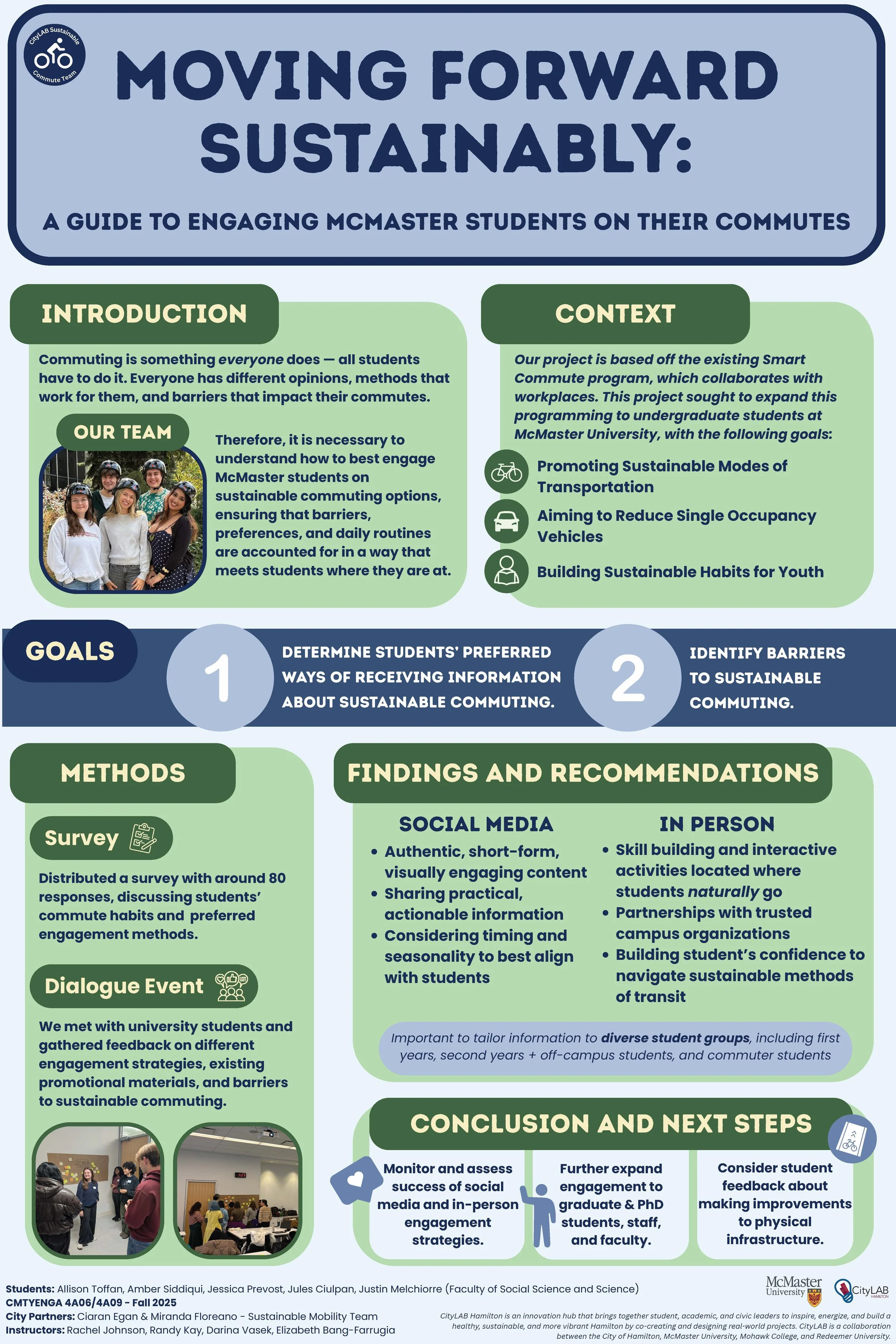
Engaging Students on their Commute

How can the City create an effective outreach strategy for McMaster students to encourage sustainable travel to and from campus?

Project Description: McMaster University is part of the Smart Commute program which encourages employers to promote sustainable transportation for their worksites. Smart Commute would like to expand its engagement and program tactics to help engage McMaster students to use sustainable transportation to campus. A main Smart Commute tool is the Rideshark app which helps people find carpool rides to reach central employment hubs. This project challenge is to determine current carpool usage for students travelling to campus and potential barriers that may prevent this from being a successful engagement. The project shall also engage with students to review ways to encourage public transit or cycling as an option for medium or short commutes and to promote the programs McMaster University currently offers to students such as the transit and bike share passes.

The main deliverable for the project is to create an engagement strategy to promote the Smart Commute program at McMaster with the goal of being able to adapt this strategy in the future for Mohawk College and Redeemer University

City Staff: Miranda Floreano, Planning and Economic Development Department

Deliverables: Secondary research, policy paper, event

Project Partner: McMaster University, Semester in Residence

Location: City Wide

City Strategy Priority: Clean and Green, Healthy and Safe Communities