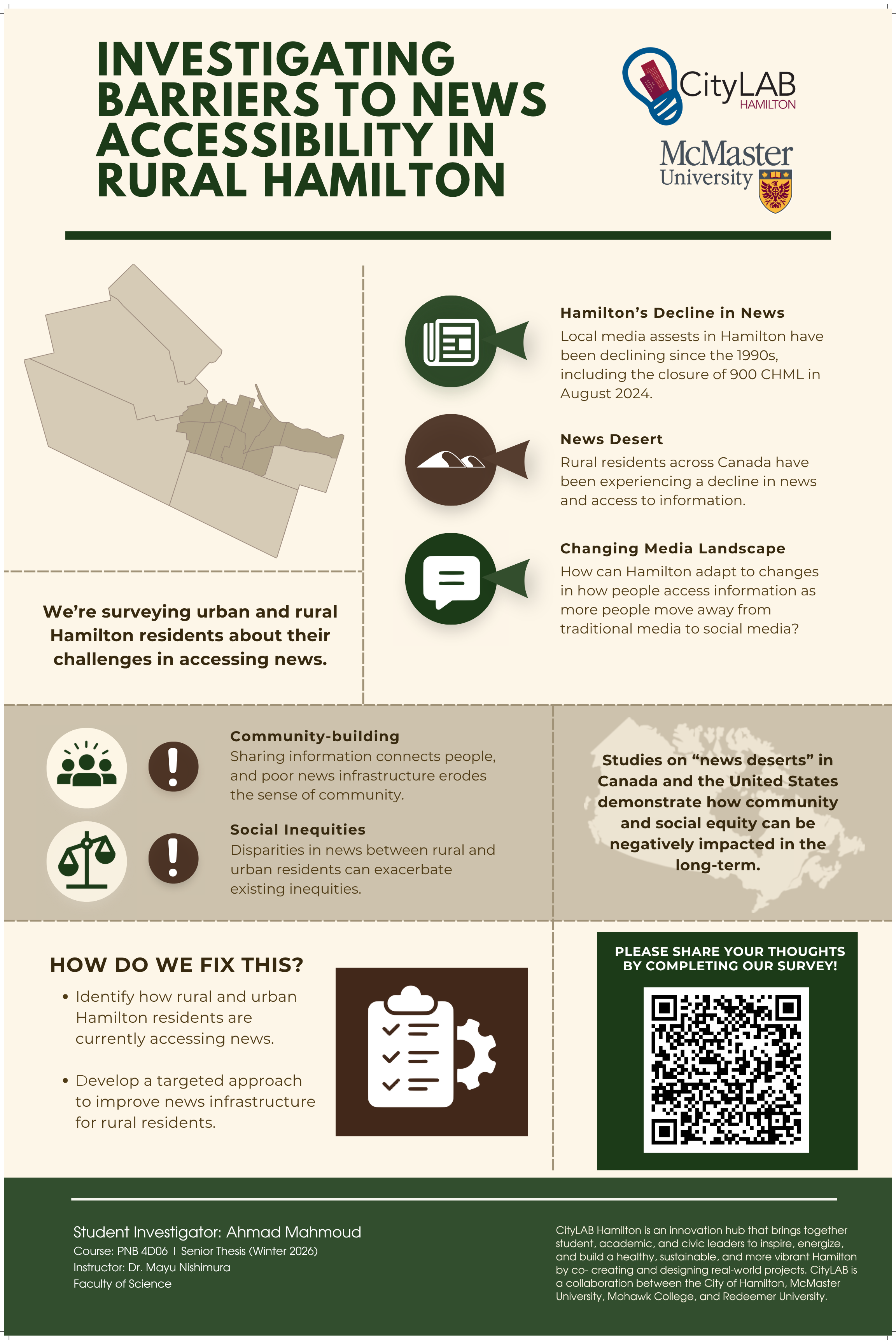
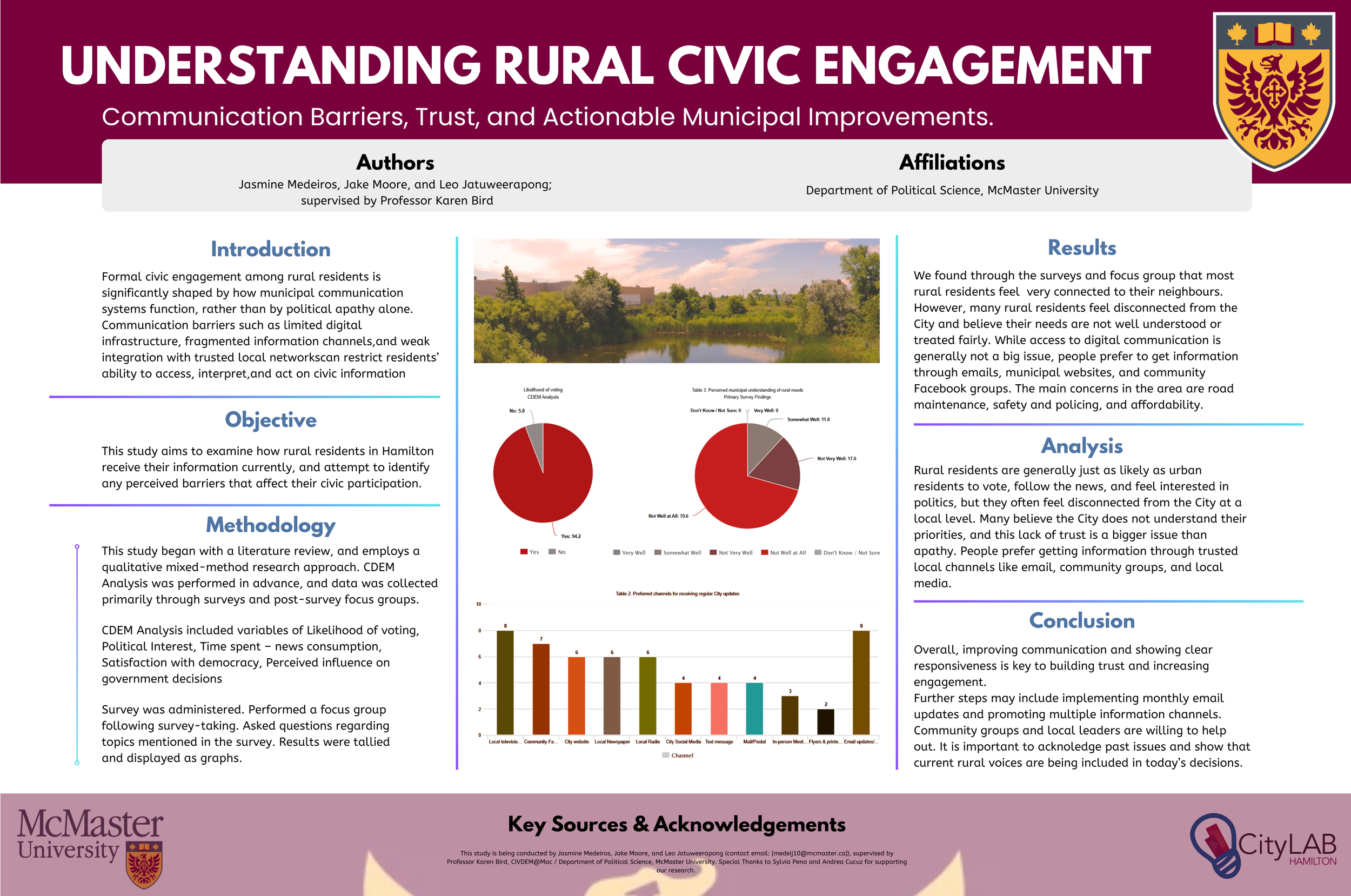
Connecting with Rural Communities

How can the City of Hamilton effectively reach rural residents to share news, updates and engagement opportunities?

Project Description: The City of Hamilton is home to urban and rural communities, each with unique communication and engagement needs. The City shares information about programs, services, and initiatives to its urban and rural communities using various communication tactics, including print and digital advertising, social media, and media relations. 

The decline of local news outlets in rural areas creates challenges to share information about municipal issues and decisions, which can lead to the risk of misinformation, reduces civic engagement, and weakens transparency.

The focus of this project is to gather information about what channels do rural residents prefer to hear about City news, service updates and engagement opportunities.

City Staff: Sylvia Pena, City Manager’s Office

Deliverables: Primary and Secondary research

Project Start Date: Fall 2025 and Winter 2026

Location: Ward 9, Ward 11, Ward 12, Ward 13, Ward 15

City Strategy Priority: Community Engagement and Participation
Promoting Healthier Attitudes towards Legal Substance Use

How can the City of Hamilton design an engaging, post-secondary student-focused health promotion campaign to encourage safer use of alcohol and cannabis?

Project Description: The City of Hamilton is looking to create an engaging health promotion campaign that promotes safer choices around alcohol and cannabis use among post-secondary students. This project will build upon the previous research completed in 2025 by the Semester in Residence project team program which reviewed poster campaigns and gathered feedback from students on what they liked, disliked, and suggestions for improvement. 

This Project Agreement is for the next phase of the project to develop a new health promotion campaign from scratch, which incorporates insights from the previous feedback to make the messaging and design more effective and relevant. The campaign should resonate with students, encourage healthier behaviours, and reflect evidence-based harm reduction principles.

City Staff: Health and Safe Communities Department

Deliverables: Primary research, Secondary Research

Project Start Date/ Availability: Winter 2026

Location: City Wide

City Strategy Priority: Community Engagement and Participation
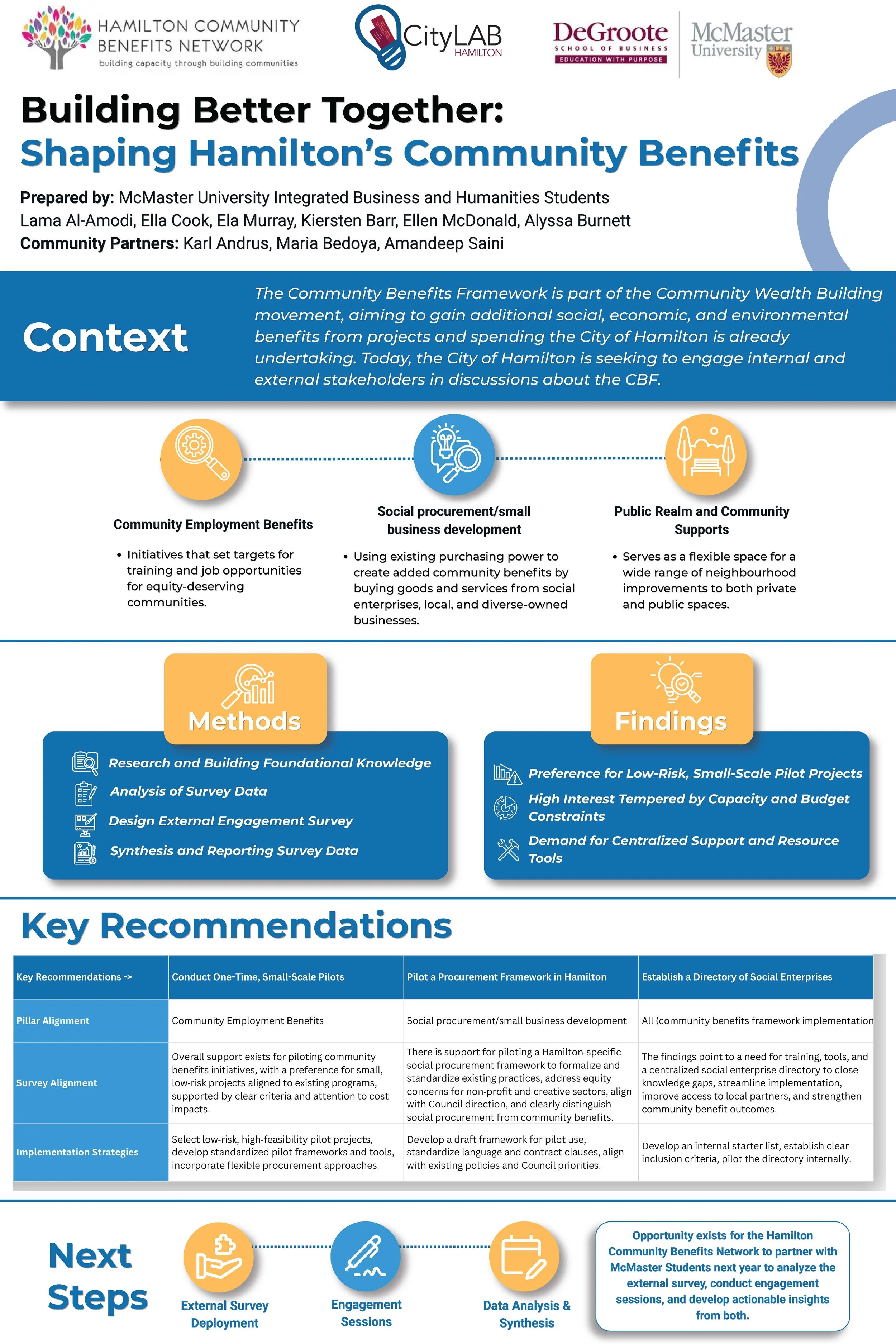
Developing a Community Benefits Framework

How can the City of Hamilton support the development of a Community Benefits Framework?

Project Description: The City of Hamilton and Hamilton Community Benefits Network are partnering on this project to further develop the research undertaken by City staff to better inform the council's mandate of building a Community Benefits Framework. This project will 

build upon the research completed by the Fall 2025 CityLAB Semester in Residence cohort and offers the opportunity to contribute directly to shaping inclusive, community-focused policies. Students will analyze survey results from an internal review of existing City initiatives,  and develop “What We Heard” reports based on community input.

City Staff: Health and Safe Communities Department

Deliverables: Primary research, Secondary Research

Project Start Date/ Availability: Winter 2026

Location: City Wide

City Strategy Priority: Community Engagement and Participation
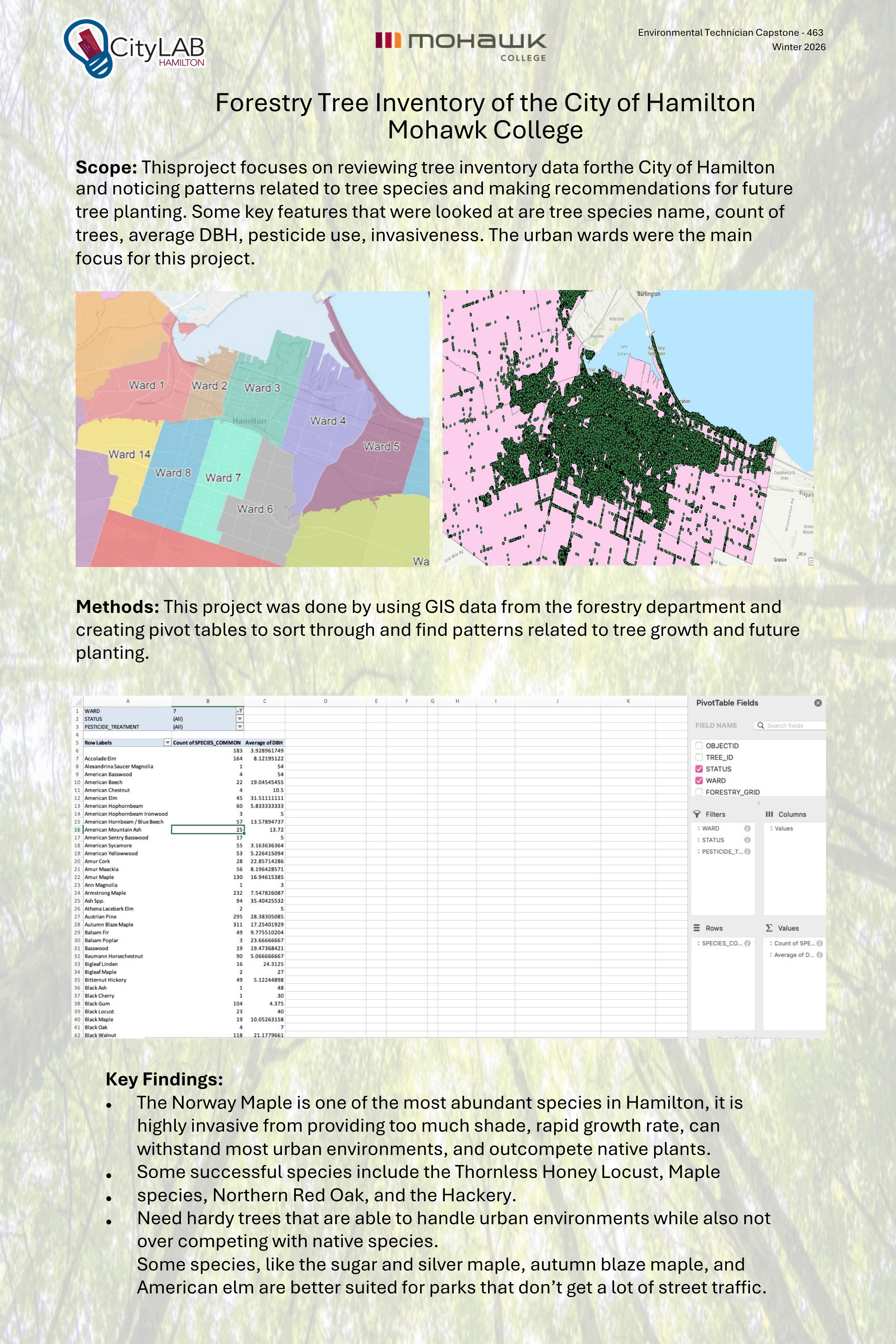
Public Tree Removal Review

How can data provide insight on public tree removals across the City?

Project Description: The City of Hamilton maintains an inventory of public trees, which is important for representing and tracking the location, species, size, and maintenance history of public tree assets through their life cycle. Trees in Hamilton are removed for a variety of reasons including private development, essential public infrastructure projects, urban expansion, and natural health decline. The focus of this project is to undertake an analysis of the City’s public tree removals to understand where and why trees are being removed and the impacts on the City’s urban forest. Data-driven analysis will help to support future planning and assist with long-term urban forest management.

City Staff: Public Works Department

Deliverables: Primary research, Secondary Research

Project Start Date/ Availability: Winter 2026

Location: City Wide

City Strategy Priority: Clean and Green, Built Environment and Infrastructure

Higher Education Analytics Data (HEAD) Competition

2026 HEAD Competition

The Higher Education Analytics Data (HEAD) competition is an annual event hosted by Mohawk College since 2019. 

Students from colleges and universities across Ontario are invited to participate in the 2026 HEAD Competition, taking place on March 19–20, 2026, at Mohawk College – Fennell Campus, Hamilton.

College and University students solve real-world problems using data analytics tools and develop insightful, data-driven recommendations for decision-makers. Based on their analysis, teams will prepare a poster and deliver a presentation on their findings in two phases of the competition.

🔗 Full details on registration, rules, and the competition agenda are available on the website:  HEAD Competition Mohawk College

City Staff: Planning and Economic Development Department, Public Works Department

Deliverables: Data analysis

Project Start Date/ Availability: Winter 2026

Location: City Wide

City Strategy Priority: Healthy and Safe Communities, Clean and Green

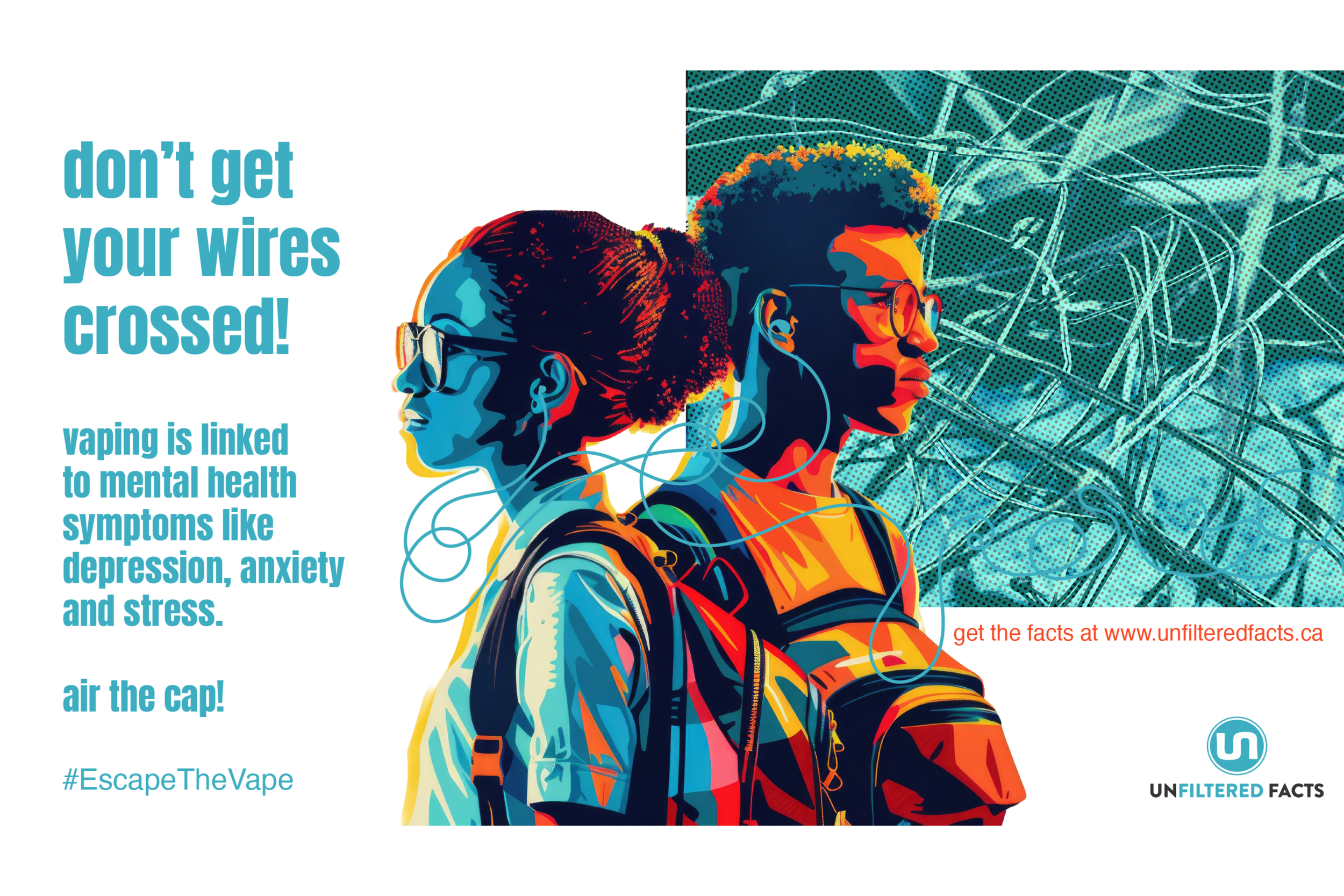
Unfiltered Facts Content Creation

How can we use Unfiltered Facts social media channels to engage youth with nicotine prevention messaging?

Project Description: The tobacco and vape industry have a long history of marketing nicotine products to youth. The Hamilton Public Health Services Tobacco Control Program recently developed a new Youth Engagement Strategy and the team is looking to build upon their past youth engagement work and revitalize the social media content shared through “Unfiltered Facts” online to provide factual information to youth so that they can make informed health decisions about the use of tobacco and vape products. 

This project is focused on preventing the initiation and escalation of youth nicotine use through social media. This project provides the opportunity for the student community to build their graphic design and video editing skills to plan and develop creative social media content (i.e. reels and static posts) to share nicotine prevention messaging for youth. The content will be used to help increase youth followers on the Unfiltered Facts social channels, and increase the outreach and engagement with the target audience.

City Staff: Sharon Munn & Kristin Olive, Healthy and Safe Communities Department

Deliverables: Marketing strategy, social media content development (static and video)

Project Start Date/ Availability: Fall 2025 / Winter 2026

Location: City Wide

City Strategy Priority: Healthy and Safe Communities

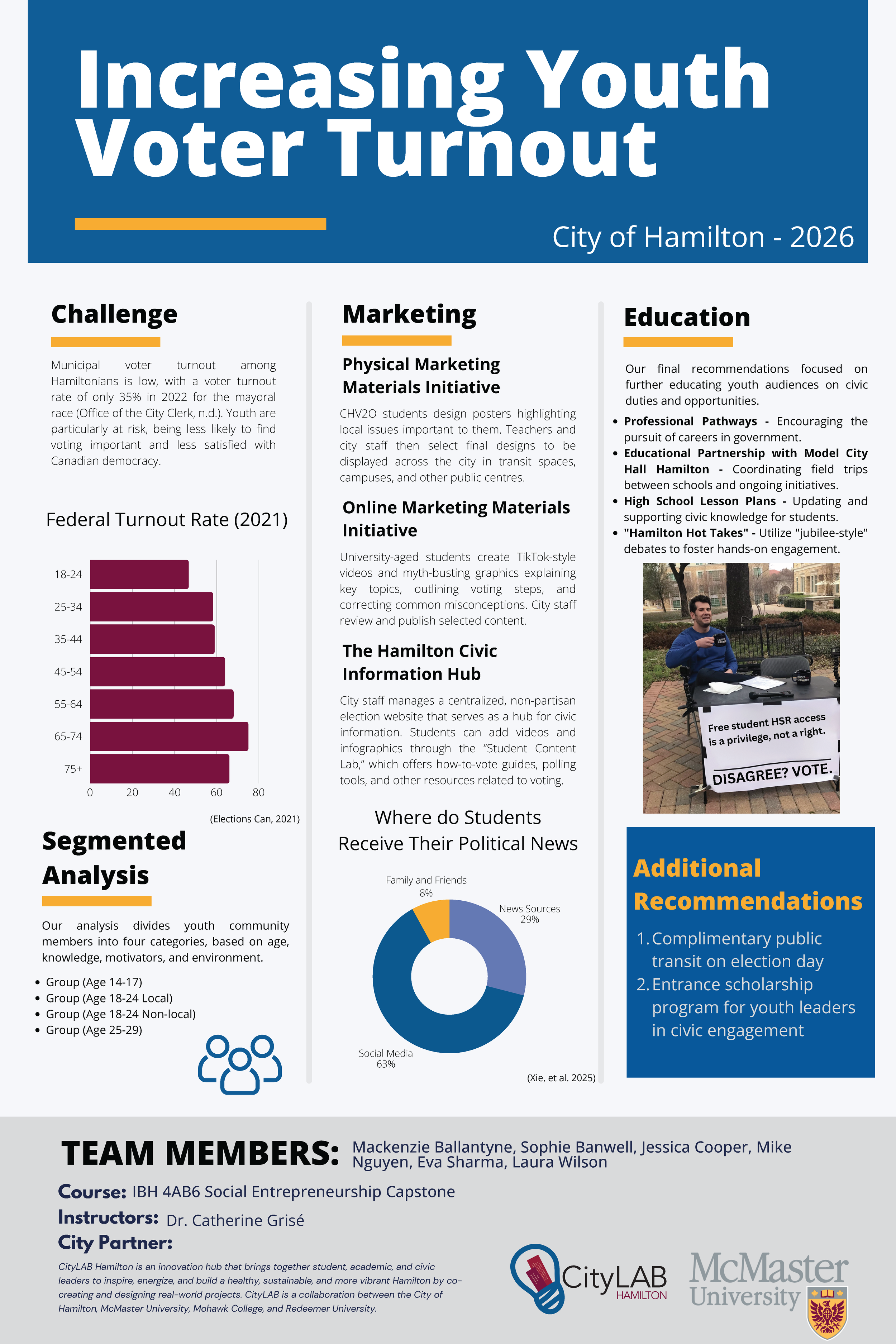
Increasing Youth Voter Turnout

How can we encourage voter turnout among the youth population?

Project Description: Voting in elections provides the opportunity for citizens to be engaged in their community’s democratic process and shaping how services are offered in their municipality. There is a general decline in voter turnout, particularly among the youth population. This project will undertake research on ways to increase youth voter turnout for municipal elections and to build interest in the importance of understanding municipal governance.

City Staff: Health and Safe Communities Department

Deliverables: Primary research, Secondary Research

Project Start Date/ Availability: Winter 2026

Location: City Wide

City Strategy Priority: Community Engagement and Participation
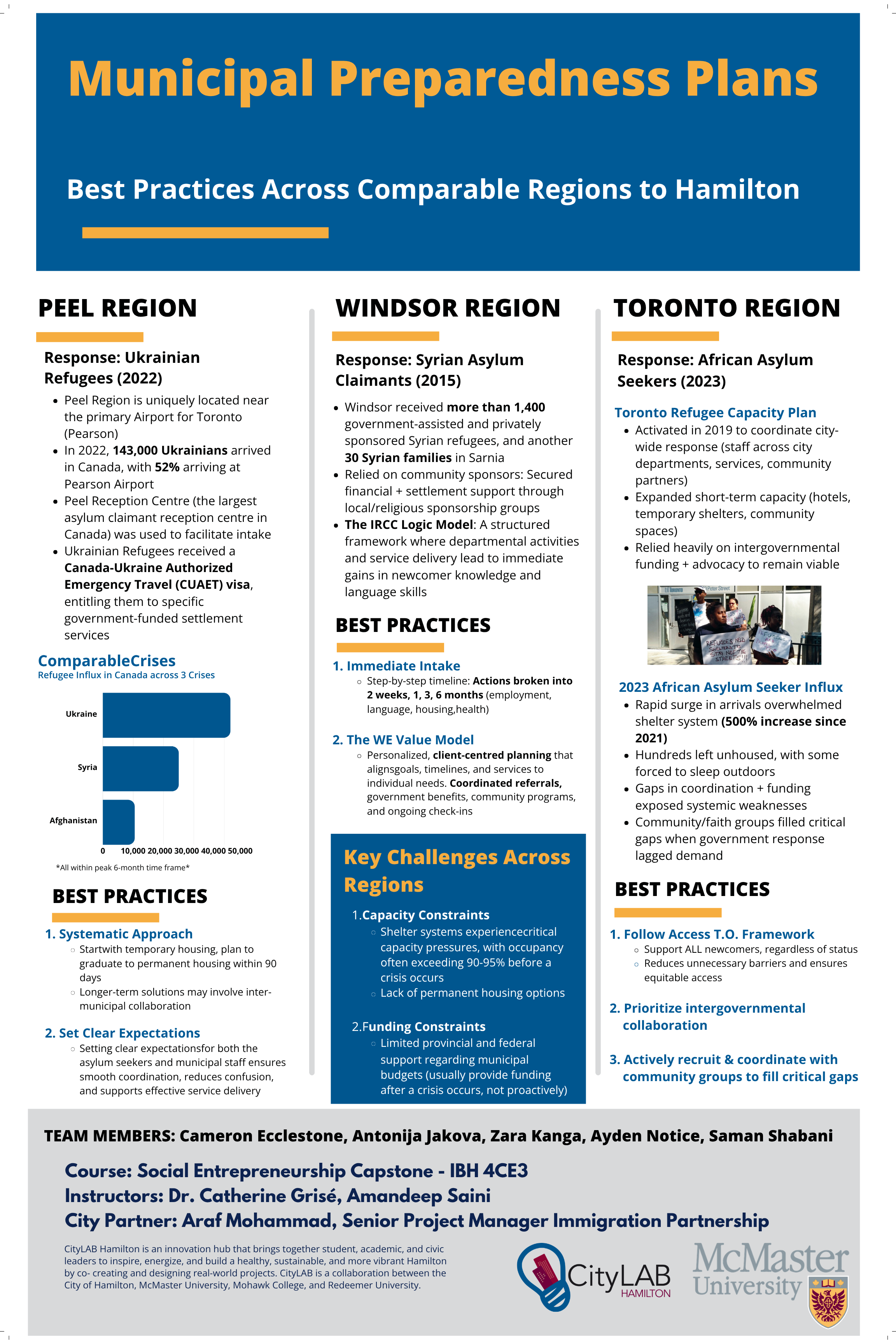
Rapid Population Influx Planning

How can the City of Hamilton prepare to respond to potential rapid population arrivals of newcomers and refugees in the future?

Project Description: The City of Hamilton and other communities across Canada have experienced influxes of sudden population growth which are attributed to various factors such as environmental disasters, persecution, and other threats to human safety.

All levels of government (i.e. federal, provincial, and municipal) have a role to play in welcoming and to facilitate the integration of newcomers. 

This project shall undertake research and analysis to provide information on the municipal requirements that the City of Hamilton should consider to develop a plan for future rapid population influxes.

City Staff: Araf Mohammad, Planning and Economic Development Department

Deliverables: Secondary research

Project Start Date/ Availability: Winter 2026

Location: City Wide

City Strategy Priority: Healthy and Safe Communities, Culture and Diversity